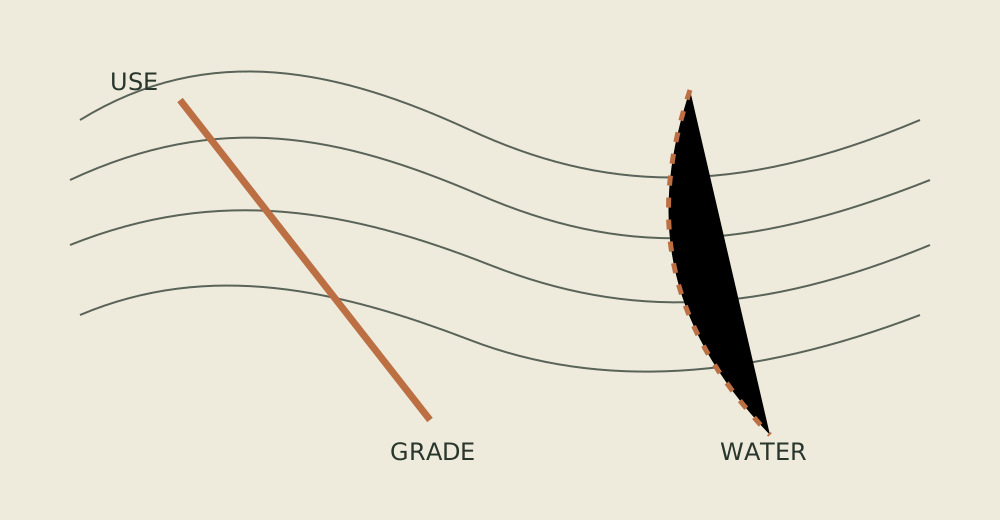
Use / where the project earns its space
Watch the routes already forming: door to grill, driveway to back gate, kitchen to table, lawn to play area. A successful outdoor room sits where movement and use can support it rather than where a brochure says a patio should go.
Grade / where gravity sets the terms
Slope affects excavation, wall height, steps, access, drainage, and how much level space can be made responsibly. “Flatten the yard” is not a scope by itself. The useful question is which transitions have to work and which grade can remain.
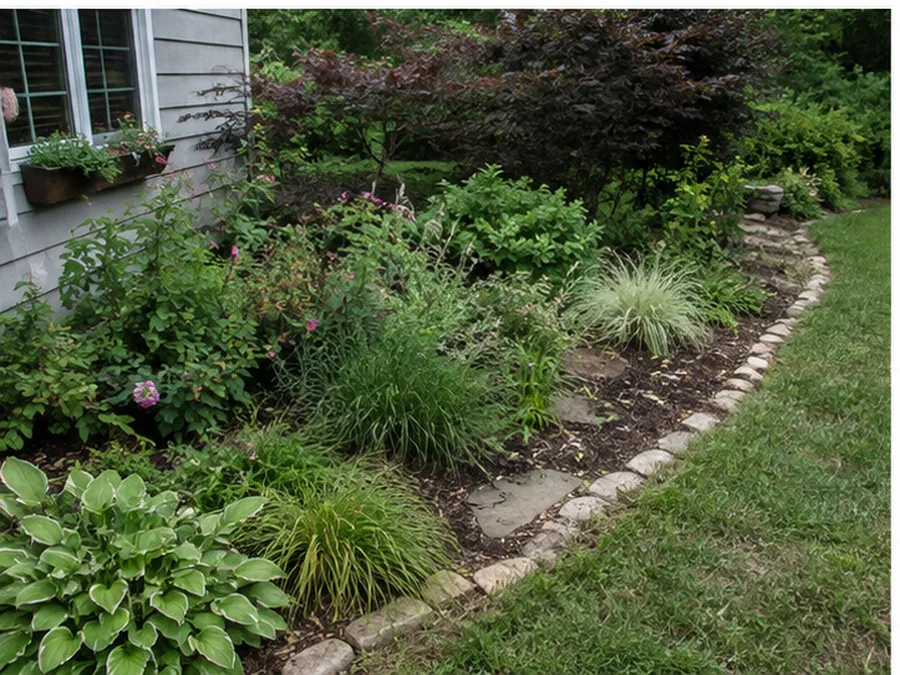
Planting / what can live with the site
Sun, shade, water, soil condition, scale, and maintenance expectations belong with the planting choice. Mossline can renovate planting as part of the landscape work, but the concept does not represent licensed landscape-architecture services.
Water / trace the path
Look for downspout discharge, hillside runoff, low points, compacted routes, neighboring grade, and where water is already trying to leave. A drainage feature should respond to a visible water path, not get added after hardscape blocks it.
Conditions overlap
A patio may need grade work. A retaining transition may need drainage. A landscape renovation may need circulation changes. The service pages make scope readable; the site visit makes the relationships specific.
When the answer needs another professional
Structural retaining conditions, complex drainage/civil questions, surveying, landscape architecture, utilities, or other regulated/professional issues may require appropriate outside expertise. Mossline should identify that boundary rather than impersonate it.