Four things to notice first
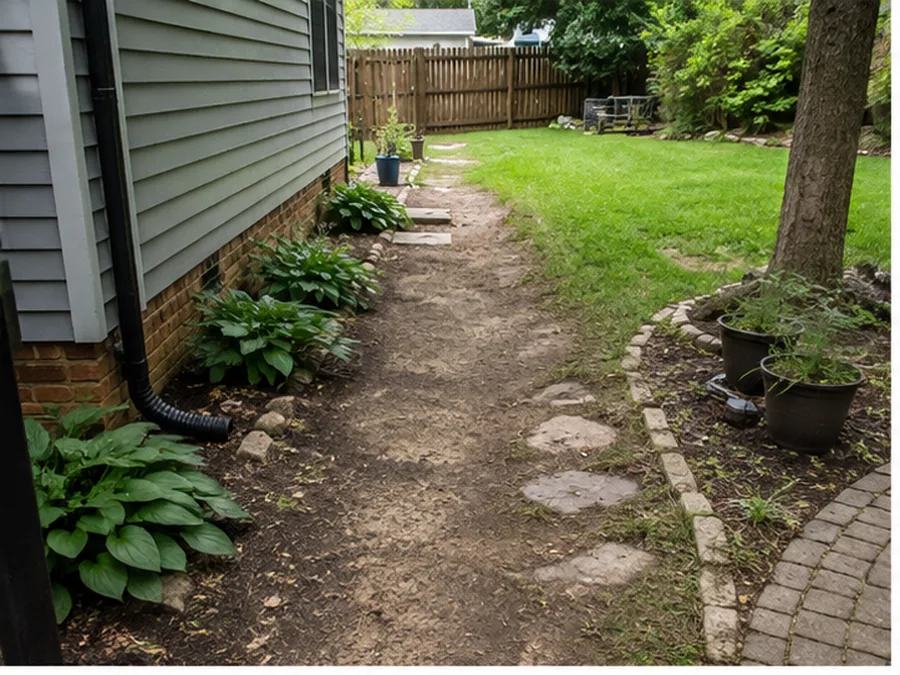
Use: where the household actually wants to sit, cook, move, or gather. Grade: where slope makes movement or construction difficult. Planting: what the light, soil, scale, and maintenance pattern can support. Water: where runoff enters, crosses, pools, or leaves the site.
Outdoor work as one system
A patio built across a runoff path creates a drainage problem. A retaining wall changes grade and movement. Planting can soften a transition but cannot substitute for the wrong structure. Mossline’s fictional service pages separate scopes for clarity while the project planning keeps the relationships visible.
Field work, not a perfect gallery
Three fictional field records show different starting conditions: a Signal Mountain slope, a compressed North Chattanooga courtyard, and a Lookout Valley patio crossed by runoff. Each begins with what the site was doing before the feature was chosen.
Project scale in plain terms
Outdoor-living work begins around $18,000 in the fictional concept. Meaningful landscape renovations begin around $12,000. Walls and drainage remain site-specific because access, excavation, quantities, grade, water behavior, and engineering needs can change the work quickly.
A site visit is earned by the site brief
The first request asks what you want to use the property for and what conditions you already see—slope, pooling, runoff, access. Photos can help. The point is to arrive at a site visit with a question worth testing.