
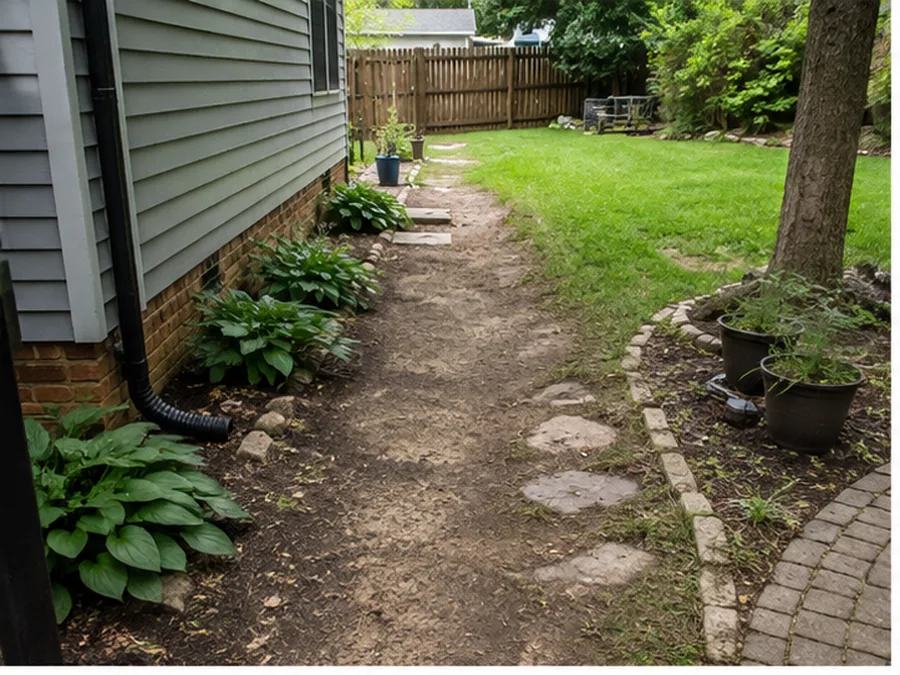
Read the existing condition
Which plants are healthy and appropriately scaled? Where are beds fragmented? Which routes cut through planting? Where does shade or runoff change what can survive? Removal decisions are part of the design logic.
Planting belongs to the site
Light, moisture, mature size, layering, seasonality, and maintenance appetite shape the palette. Mossline’s concept treats planting as part of the constructed landscape, not a decorative list pasted onto a plan.
Renovation scope
The fictional work can include removal, bed reconfiguration, planting, edges, selected lawn-to-landscape transitions, and coordination with hardscape/drainage where needed.
From about $12,000
Meaningful landscape-renovation scopes begin around $12,000+ in the concept. Plant quantities/sizes, removal, access, soil/site preparation, irrigation modifications by others if needed, hardscape, drainage, and phasing can change the total.
Maintenance expectation is a design input
A dense, high-touch planting scheme is not “better” if the owner wants lower seasonal upkeep. The site should make maintenance appetite part of the early conversation.
Professional-design boundary
Mossline does not claim licensed landscape-architecture services. Projects requiring that professional role should involve an appropriate licensed provider.