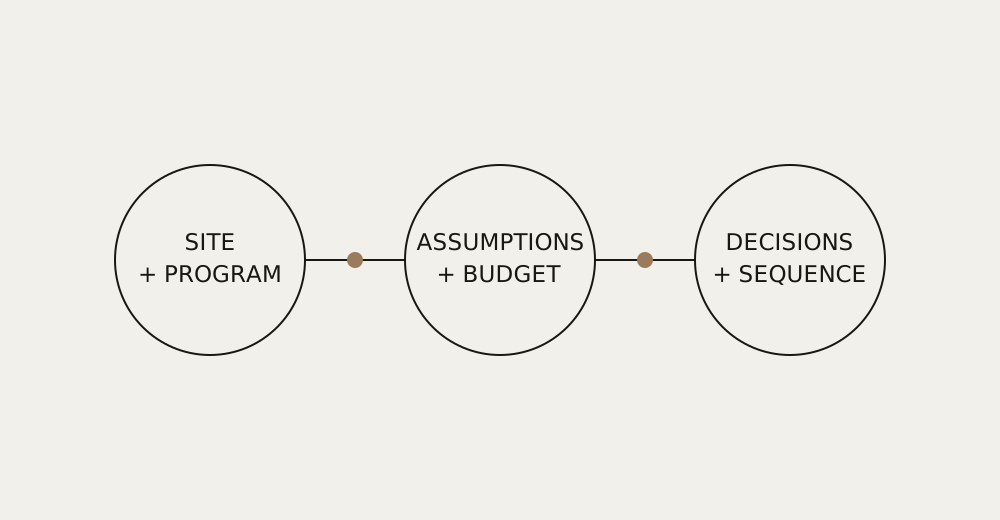
When to involve the builder
The best moment is while major site, scope, system, and material decisions are still movable. That can be before an architect is selected, during concept work, or later in design—but the cost of late discovery generally rises as the documents harden.
Site + lot review
Access, slope, staging, utilities, seasonal conditions, existing structures, and other observable site factors can materially affect construction strategy. Preconstruction identifies the questions; surveying, geotechnical, engineering, permitting, and other professional determinations remain with the appropriate providers.
Budget framework
An early budget is not made more accurate by printing it to the dollar. It becomes more useful when scope, inclusions, exclusions, allowances, site assumptions, design maturity, and contingency/unknowns are stated next to the number.
Constructability + sequence
Design intent is reviewed through a construction lens: interfaces, access, long-lead materials, major assemblies, custom fabrication, sequencing, and where a detail may create cost or schedule consequences the team should see before documentation is finished.
Allowances + unknowns
An allowance is a placeholder with consequences. It should identify the category, quality/quantity assumption, selection deadline, and what happens if the owner choice moves beyond it. Unknowns should be named rather than hidden inside optimism.
Decision gates
Preconstruction should end stages with clearer decisions: proceed, investigate, revise, defer, or re-scope. The point is not endless study. The point is to make the next commitment more informed.
Collaboration without role confusion
Architects and designers protect design intent. Engineers address their professional scope. Alder Crown contributes building, procurement, cost, and construction sequence. Early collaboration works because those roles meet—not because one pretends to be all of them.