
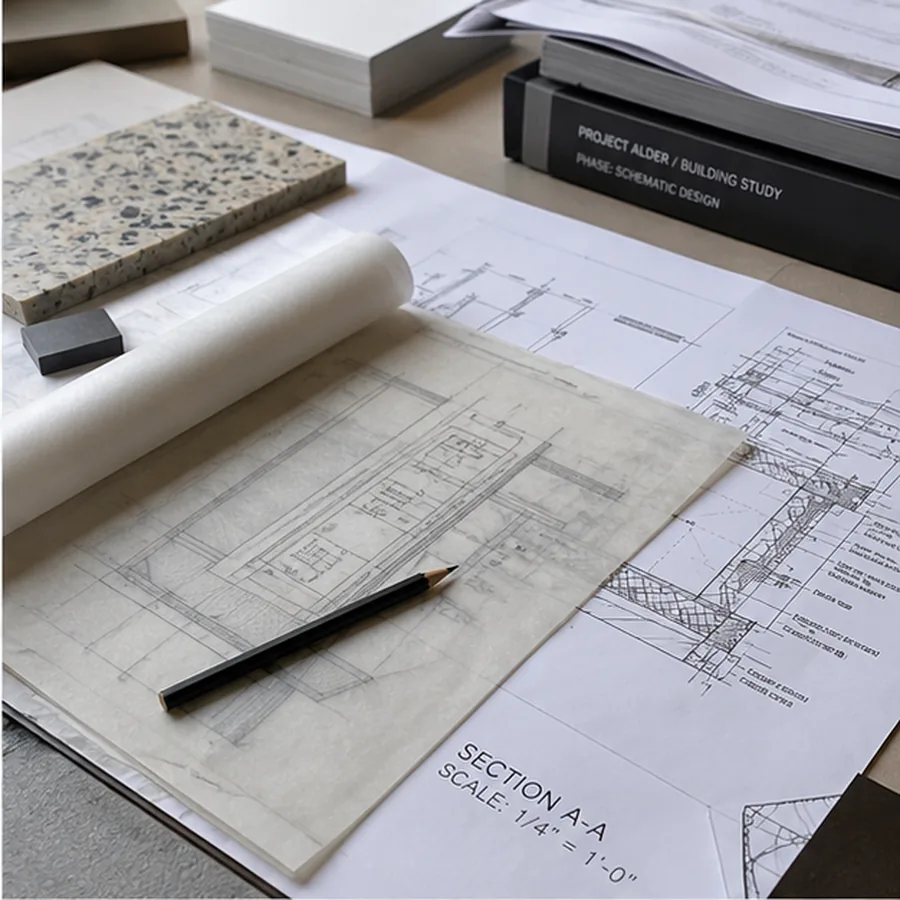
Questions this practice carries
A useful brief addresses existing framing and condition, new loads/openings, lateral/gravity implications, strengthening or replacement options, coordination with architecture and systems, and construction sequencing.
Coordination responsibility
The page should show where this discipline changes decisions elsewhere. It should not read like an isolated menu of deliverables.
Professional boundary
This is a fictional TruePoint concept. No real architect/engineer licenses, seals, registrations, professional liability coverage, or jurisdictional authority are claimed. A real project requires appropriately licensed professionals.
Where this changes the project
Structural input becomes a feasibility question when a concept depends on removing bays, adding openings, introducing concentrated equipment loads, extending a building, retaining a compromised assembly, or changing use. Those questions can eliminate or reshape an option long before detailed design.
The fictional practice page therefore emphasizes decision timing and coordination. It does not simulate calculations, sealed documents, or jurisdictional engineering authority.