01 Define the decision
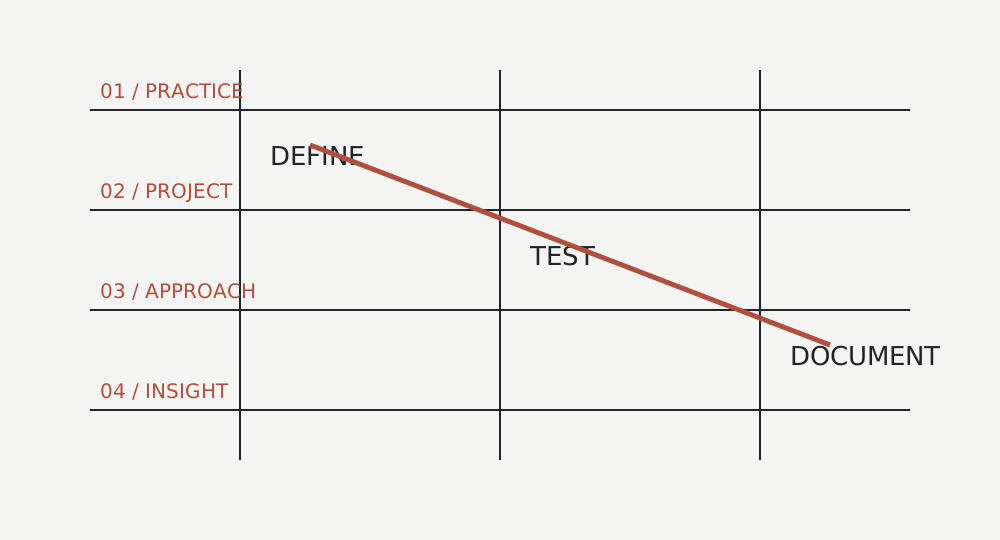
State the owner decision in terms that can be tested: renovate or replace, add or reorganize, occupy through construction or vacate, retain a system or replace it.
02 Establish the brief
Program, users, workflows, existing conditions, site/building constraints, technical capacity questions, schedule, phasing, procurement, and budget assumptions become a visible brief.
03 Test alternatives
Alternatives should reveal consequences rather than merely offer stylistic options. What changes area, structure, systems, phasing, schedule, operations, or future adaptability?
04 Coordinate early
Bring structural and building-systems questions forward when they can change the decision. The concept explicitly distinguishes coordination from real licensed engineering responsibility.
05 Record assumptions
An assumption log is useful because unanswered questions do not vanish. They become design, pricing, schedule, or construction risk.
06 Advance with fewer hidden premises
Design becomes more specific only as the project earns specificity.