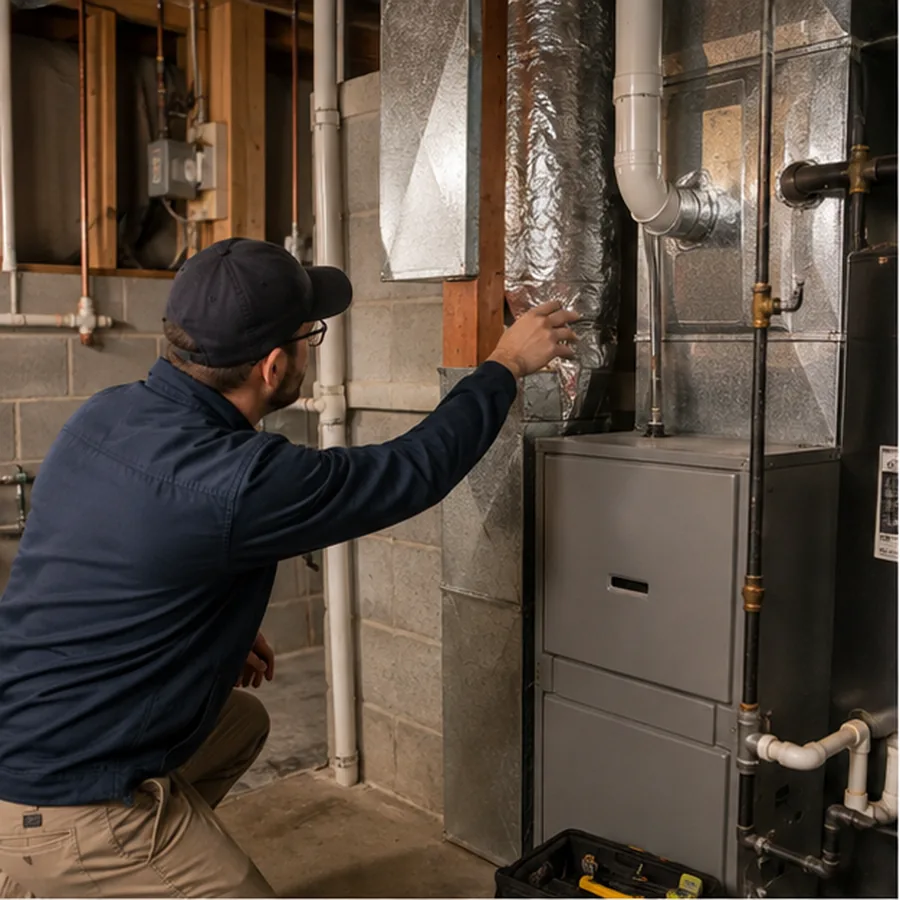
Old Town / Heat-pump transition
Starting condition: a 1960s split-level with aging cooling equipment and an owner considering lower fossil-fuel dependence.
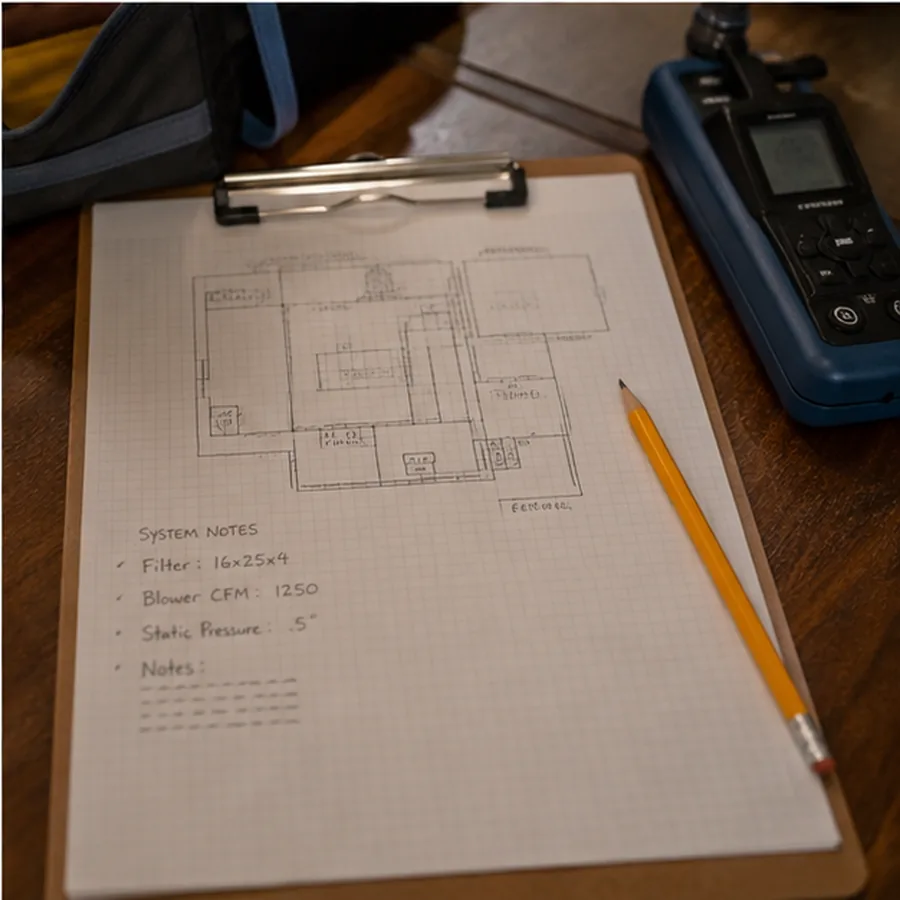
Decision factors: existing duct condition, comfort pattern, cold-weather operation, electrical/backup strategy, and whether a staged transition made more sense than a single equipment swap.
Fictional scope: home/system review, load/duct questions, cold-climate heat-pump selection criteria, controls and backup-heat strategy.
What it demonstrates: a heat-pump conversation has more inputs than an efficiency rating.
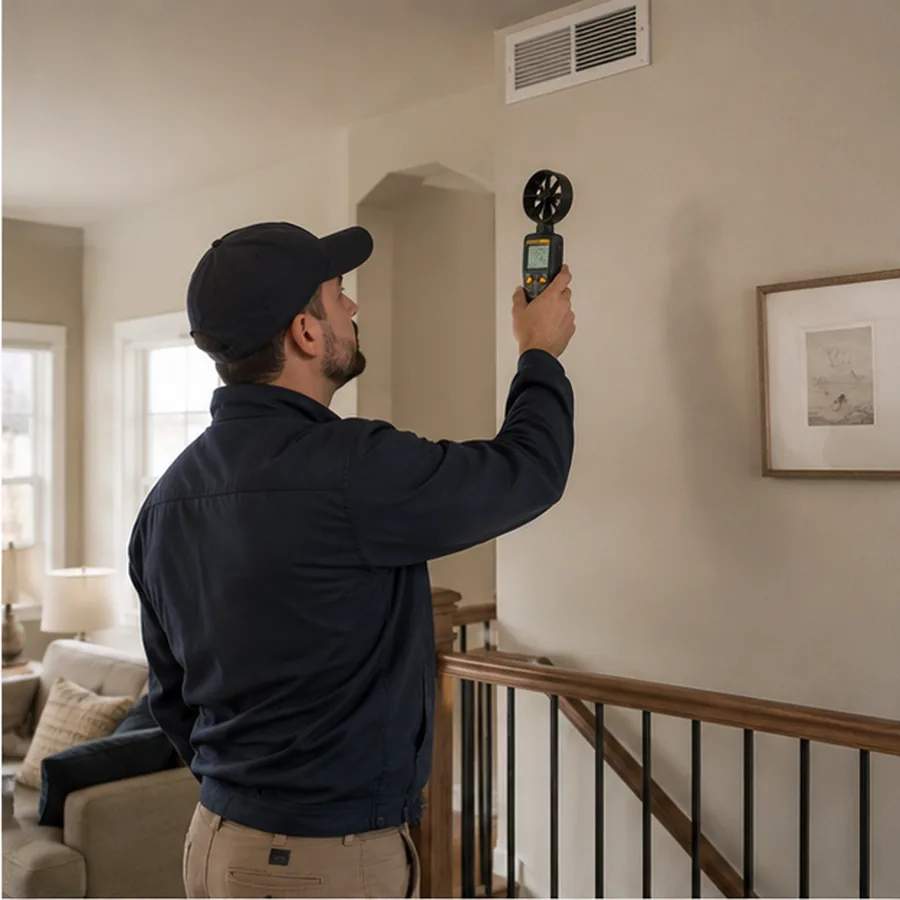
South Fort Collins / Comfort balance
Starting condition: meaningful upstairs/downstairs temperature difference in a two-story home.
Decision factors: airflow, returns/supplies, system operation, controls, envelope/use patterns, and whether replacement was actually supported by the findings.
Fictional scope: diagnostic review, airflow findings, system adjustments, and a staged improvement plan.
What it demonstrates: “uneven” is a symptom, not a remote equipment-size diagnosis.
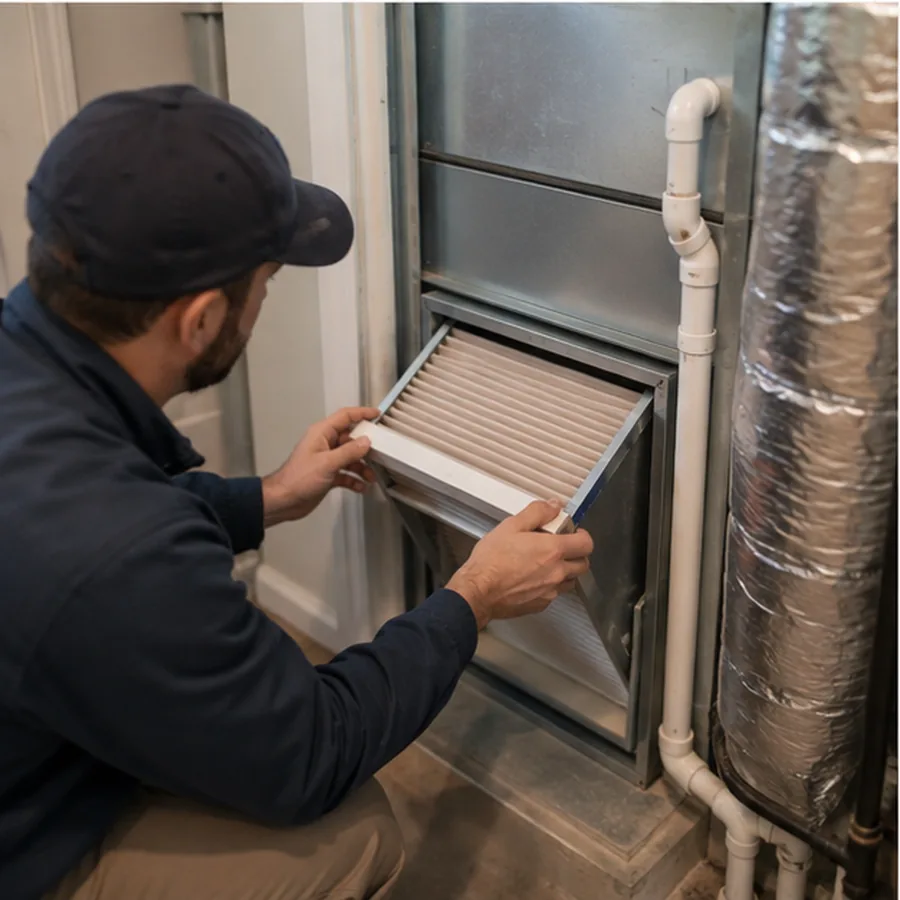
Laporte / Filtration upgrade
Starting condition: repeated dust complaints and frustration with filter performance.
Decision factors: filter cabinet, airflow resistance, equipment compatibility, owner maintenance habits, and what HVAC filtration can realistically claim.
Fictional scope: compatibility review, filter-cabinet change, and owner guidance.
What it demonstrates: equipment recommendations should stay inside their actual scope; no medical outcome is claimed.