
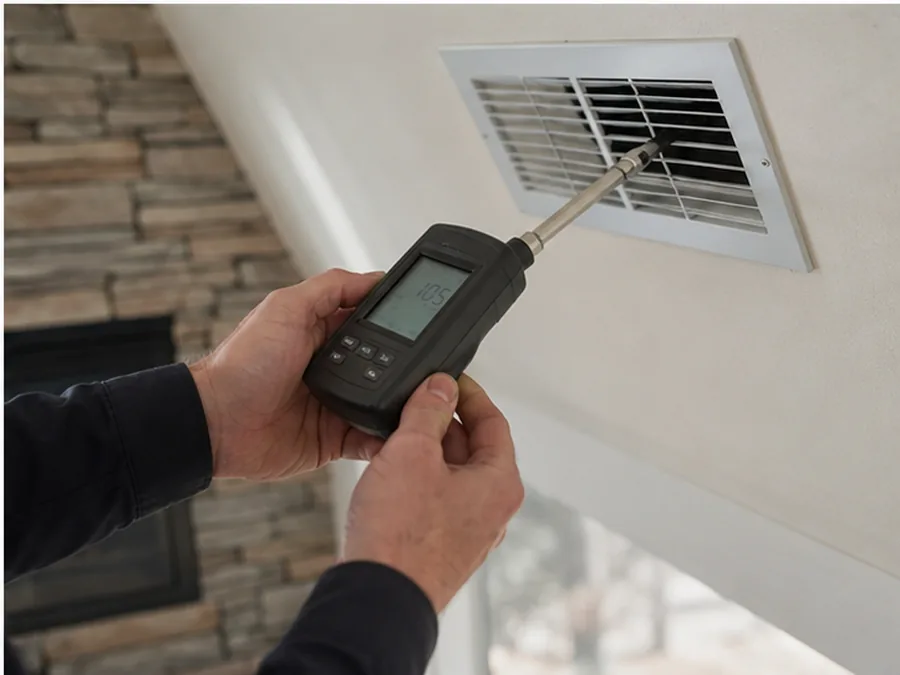
Existing heat-pump service
If a heat pump is already installed and not operating correctly, the request can begin here. The evaluation still starts with the symptom and equipment rather than assumptions about why performance changed.
Replacing a furnace + AC combination
A transition can involve load/comfort questions, duct condition, electrical capacity, outdoor-unit placement, cold-weather operation, backup heat, controls, and the homeowner’s priorities. The site intentionally avoids presenting one equipment configuration as universally correct.
Northern Colorado winter is part of the conversation
Cold-weather performance is a design and equipment question, not a reason for slogans in either direction. Kestrel’s fictional model makes backup strategy and expected operation explicit before a homeowner commits.
Old Town service note
The Old Town Heat-Pump Transition scenario begins with a 1960s split-level and aging cooling equipment. The useful part of the case is not a fake savings percentage; it is how duct, load, cold-weather strategy, and existing heating changed the decision.
Pricing
Service/diagnostic work follows the $119 starting visit context. Installation is quoted after the home/system review; no universal installed package is published.