Begin with fit, not file uploads
The first conversation is about business type, transaction volume, software, current pain points, and timing. Sensitive financial documents are not collected through the public website. If the relationship advances, the actual access and document process belongs in a secure, appropriate workflow—not a general web form.
Onboarding creates the baseline
A real onboarding would confirm the chart of accounts, bank/credit accounts, bookkeeping software, recurring workflows, open questions, and the condition of prior months. If cleanup is needed first, that is separated from the recurring monthly expectation.
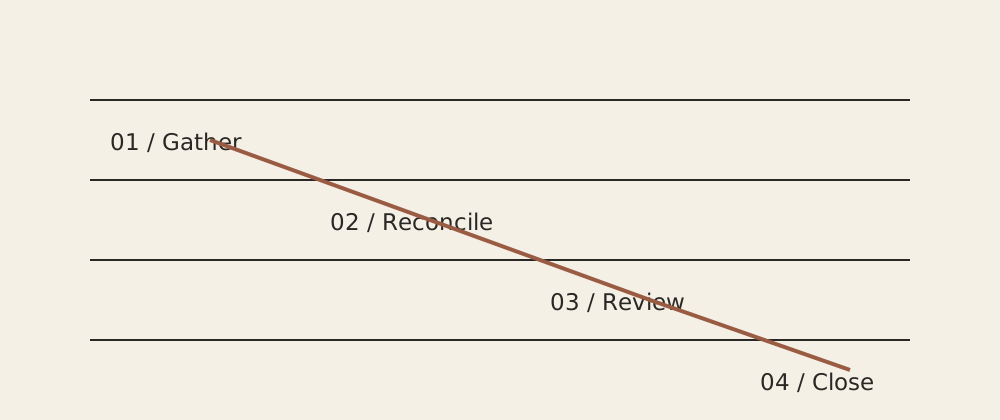
The month closes in a known order
Reconcile the accounts. Review categorization and unusual items. Surface missing information. Resolve what can be resolved. Prepare the reporting package. Send a concise note explaining what changed and which questions still belong to the owner.
Questions stay visible
A bookkeeping relationship becomes frustrating when questions disappear into a portal. Sum & Cedar’s model assumes a short, readable list of owner questions and practical communication windows. The goal is fewer loose ends, not more notifications.
Fit / not fit
The best fit is a small service business that wants recurring bookkeeping and can provide records consistently. It is not a fit when the primary need is tax preparation, complex payroll, CFO work, audit/assurance, or multi-entity accounting beyond the model.
A fictional practice, clearly labeled
Sum & Cedar is a TruePoint concept rather than a real bookkeeping firm. The structure demonstrates how a professional-service site can communicate trust without inventing credentials, client logos, or testimonials.